
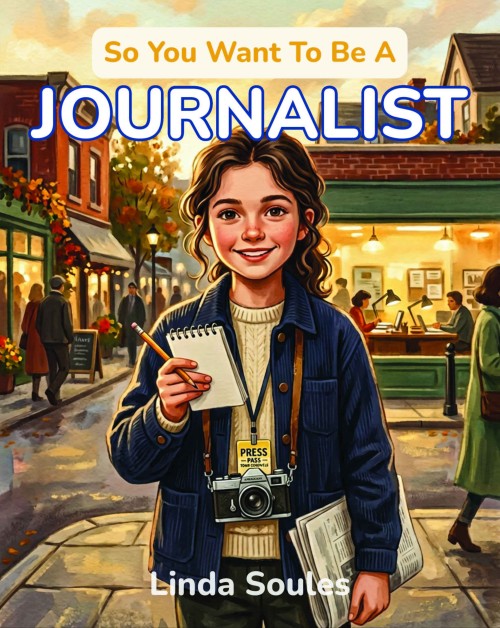


Somewhere right now, a reporter is knocking on a door no one wants to open. Somewhere else, another is reading the 400th page of a court document, looking for the one sentence that doesn't add up.
This is what journalism actually looks like. Not the bright lights and the breaking-news graphics — but the slow, stubborn work of finding out what is true and telling everyone else before anyone else does. Journalists ask the questions powerful people would rather no one asked. They write the stories that change laws, free the wrongly convicted, and sit beside families on the hardest day of their lives to get the truth right.
This vivid, thoughtfully illustrated guide for curious readers ages 10–14 (and welcoming to readers 8 and up) takes young people inside one of the most demanding and consequential professions in the modern world. They'll learn the difference between a beat reporter and an investigative journalist, why one source is never enough, and how a single Freedom of Information request can crack open a story hiding in plain sight. They'll discover the daily rhythm of a working newsroom — the morning pitch meeting, the afternoon interviews, the editor who sends a draft back three times, and the deadline that does not move.
Readers will follow journalists into the field: the city-hall reporter watching a budget vote, the foreign correspondent filing from a place most people couldn't find on a map, the science reporter at the edge of a launchpad, and the sportswriter in the press box — where cheering is strictly forbidden. They'll learn how reporters protect their sources, verify what they're told, and decide what belongs in print and what doesn't. They'll also confront the hardest parts of the job — the difficult interviews, the threats that sometimes come with a byline, and the responsibility of getting it right when people are reading every word.
Along the way, readers meet real journalists who changed history — Ida B. Wells, Nellie Bly, Edward R. Murrow, and Gordon Parks — and uncover surprising true stories: news once delivered by carrier pigeon, the most famous wrong headline ever printed, and the secret Watergate source known only as "Deep Throat."
From small-town weeklies to international news desks, journalists do the patient work of keeping a free society informed. This book introduces young readers to the people who choose that work — and asks whether the curiosity, persistence, and clear-eyed honesty it requires might already live in them.
Linda Soules's So You Want to Be a Journalist is a clear-eyed career guide for ten- to twelve-year-olds who question what they hear. It strips away headline glamour and shows reporting as ve... Read the full review



Browse our calendar below to see all upcoming events and never miss a free book opportunity.
See Free Books & CalendarHelp us improve by giving your feedback.
Submit Feedback