
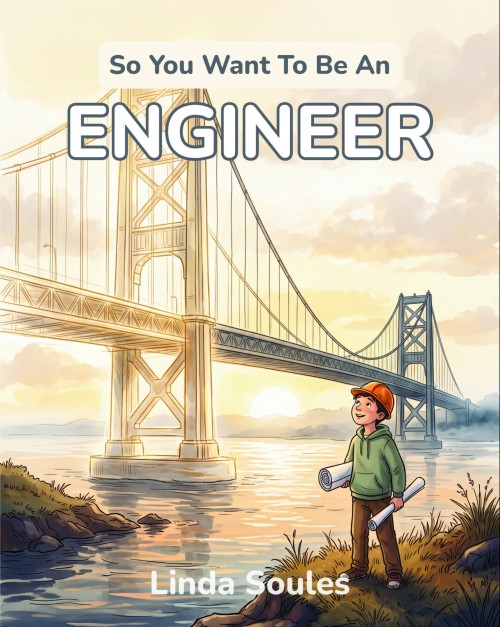


Why do engineers fire chickens at airplane windshields? Why did a woodpecker ground a space shuttle? And how did a melted candy bar lead to the microwave oven? This illustrated STEM book for kids answers those questions and many more. It shows young readers what engineers really do, how they think, and why breaking things on purpose is one of the most important parts of the job.
Kids ages 10 to 14, and curious readers as young as 8, will discover the many kinds of engineering. Civil engineers design bridges and the water systems that reach their faucets. Mechanical engineers build machines, from car engines to escalators. Biomedical engineers create prosthetic hands and cochlear implants, aerospace engineers send spacecraft into space, and software engineers write the code that runs video games and traffic lights. Readers learn the engineering design process step by step, from brainstorming and building a prototype to testing it until it breaks and trying again.
Real stories make the ideas stick. Readers spend a day as a biomedical engineer building a prosthetic hand for an eleven-year-old who wants to tie his own shoes. They find out how a college student’s homework question helped save a New York skyscraper, why the Tacoma Narrows Bridge twisted itself apart in 1940, and how Bubble Wrap started as wallpaper nobody wanted. They meet engineering heroes, including Emily Warren Roebling, who saw the Brooklyn Bridge to completion, and Mary Jackson, NASA’s first Black female engineer. They also meet Margaret Hamilton, whose software helped land astronauts on the Moon, Nobel Prize winner Shuji Nakamura, and William Kamkwamba, who built a windmill from scrap as a teenager.
The book is honest about the challenges as well as the rewards. It covers the long hours, the tough design reviews, and the responsibility of keeping people safe. Along the way it serves up world records, myth-busting, odd engineering traditions, and hands-on activities kids can try this week, like the Marshmallow Challenge. A glossary, questions engineers ask, and a list of books, websites, competitions, and organizations help readers keep exploring.
Part of the award-winning So You Want To Be A… career exploration series, this book is a natural fit for STEM classrooms, homeschool science units, career days, and library collections. It also makes a thoughtful gift for any kid who loves building, tinkering, coding, robotics, or taking things apart to see how they work. Parents and teachers will find plenty to talk about, too.





Browse our calendar below to see all upcoming events and never miss a free book opportunity.
See Free Books & CalendarHelp us improve by giving your feedback.
Submit Feedback