


What if your favorite candy is actually a science experiment someone already solved?
A lollipop is technically glass. Cotton candy is mostly air. A caramel and a brittle toffee start as the very same sugar — the only difference is a few degrees on a thermometer. Behind every treat is a scientist who figured out exactly how to make delicious happen on purpose, batch after batch.
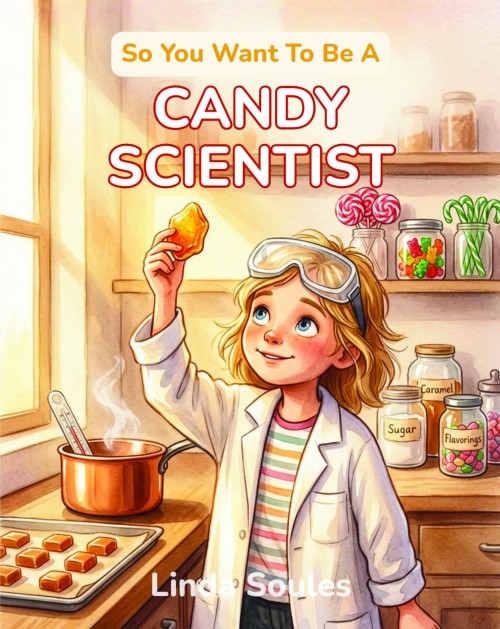
So You Want To Be A Candy Scientist invites curious kids ages 10–14 inside one of the most surprising jobs in food science — where chemistry, creativity, and a well-trained sense of taste come together to turn one humble molecule into hard candy, fudge, caramel, marshmallow, and more. Written to take young readers seriously, this richly illustrated guide reads like a conversation, not a lecture, and treats kids as the future scientists they might become.
Inside this book, young readers discover:
Real scientists. Real history. Real possibility. Kids meet pioneers like Harvey Wiley, whose work created the Pure Food and Drug Act and made candy safe for every child since; Milton Hershey, who cracked shelf-stable milk chocolate in 1900; and Rebecca Robbins, the Mars Wrigley scientist who helped discover a true natural blue hidden inside red cabbage.
The book closes with hands-on experiments kids can try at home (grow rock candy, make sugar glass, run a chocolate snap test), a kid-friendly glossary of candy-science terms, and a guide to books, websites, and next steps for future food scientists.
More than a career guide, it carries a quietly powerful message: that bringing real care and rigor to small, everyday joys — the candy shared at the movies, the sweet handed over at the end of a hard day — is serious, worthwhile work.
A perfect STEM gift for curious kids, science lovers, and anyone with a sweet tooth and a big "why?" Ideal for classrooms, homeschool, and shared reading — with plenty of fascinating facts to surprise the grown-ups too.
One molecule. Endless possibility. The next batch is waiting.
So You Want To Be A Candy Scientist by Linda Soules takes a question kids actually ask and gives it a proper answer: how can one ingredient become fudge, caramel, or a glass-clear lollipop?... Read the full review



Browse our calendar below to see all upcoming events and never miss a free book opportunity.
See Free Books & CalendarHelp us improve by giving your feedback.
Submit Feedback