


A romantic conspiracy thriller with explicit sexual content and graphic violence. Intended for adult readers.
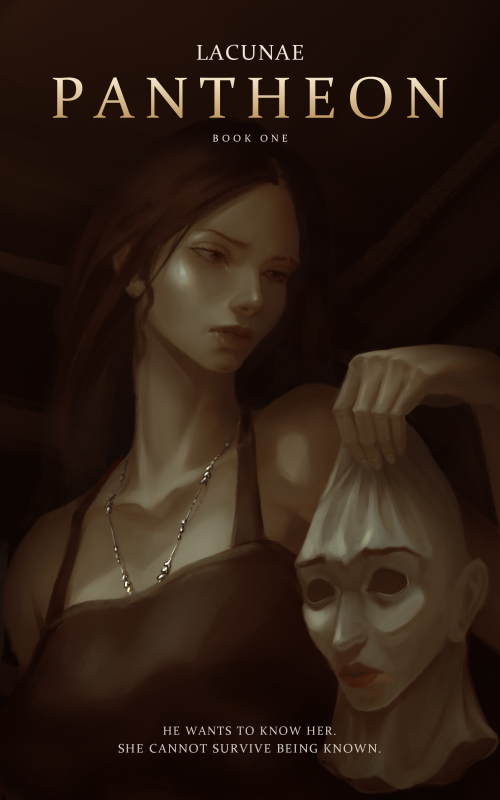
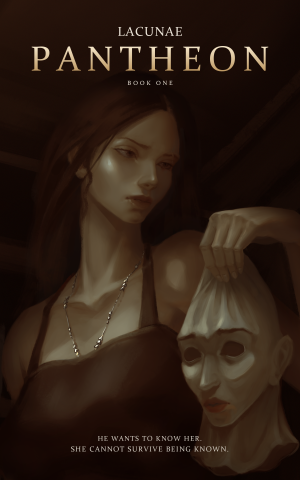
Vivienne Ho does not exist.
For five years the most composed woman in any Hong Kong boardroom has been a face Circe puts on by hand before seven each morning, and a life built so completely it became real to the woman wearing it.
Circe used to kill for a living, for a private house in Geneva, and she walked away from it six years ago. This is the season the house puts half a billion dollars on her head and every contractor in her old trade starts looking.
Damien Tang loses a container terminal to her on a Thursday and wants her by the weekend. His family opens a file on the woman he cannot stop thinking about, and he lets it run. He has money, no training, and no idea what he is buying.
The hunters only need to find her. Damien needs to see her, properly, at close range, and being seen is the one thing her craft cannot survive.
He is not going to stop.
Rivals to lovers, with an assassin hiding in plain sight. For readers of Red Sparrow, First Lie Wins and The Night Manager. Book one of a trilogy; it stands alone.
Q. What inspired you to write this book? Was there a particular moment or event that sparked the idea?
Ans. It began with 007 First Light. When I finished it I wanted to write something that left me with the same feeling. Not long after, I watched The Shadow's Edge, where a crew of thieves keeps switching outfits until even the city's cameras give up on them, and hiding in plain sight became the seed of the whole book. The idea underneath arrived soon after: for Vivienne, being loved means being seen, and being seen is the one thing she cannot risk. It actually started on 15 July as a branching interactive story. Five days in, I shelved the branches and began again as a novel, because she needed a reader who could not pick an easier path through her.
Q. What research did you undertake to write this book? Were there any surprising or unexpected findings that you discovered during your research?
Ans. Most of it was money and paperwork. Vivienne runs a fund and Damien buys and sells businesses, so I read a lot about how deals like theirs really happen, from how a container terminal changes hands to what a family's lawyers can find out about you without you ever knowing they looked. I also spent time on the legal side in Hong Kong, company law and how contracts and disputes are handled there, because a lot of the danger in this book is quiet and sits on paper. The surprise was how much is simply public. In Hong Kong anyone can search the Companies Registry for a company's directors for a small fee, and once I knew that, I understood exactly why Vivienne is so careful about every signature she puts her name to.
Q. What was the biggest challenge you faced while writing this book? How did you overcome it?
Ans. Making my two narrators sound like two different people from the inside. The book switches between Vivienne and Damien a chapter at a time, and the rule I set for her is that she never names a feeling, anywhere, because for her that would be a security failure. Everything she feels has to show up in what she does with her hands and which chair she takes. Damien is allowed to say what he feels, so his chapters are where the book admits it is a love story. What helped most was one editing pass where I read nothing but the dialogue, with all the narration stripped out. In about a minute you find out whether each voice can stand on its own.
Q. How did you go about developing the characters in the book? Were any of them based on real people or events?
Ans. Vivienne changed the most. In my first draft she was a very rich, very successful businesswoman, and I kept running into the same question: with all that, why would she not simply buy her way out of trouble? So I made her smaller. She runs a modest fund and has to win every deal, which made her feel like someone who actually lives in that world. The people in my head while I built her were fictional ones: Hornclaw, Gil Bok-soon from Kill Boksoon, and Agent Kim. All three are brilliant at a dangerous job and hopeless with people, and that was the Vivienne I wanted.
Q. Can you share any interesting anecdotes or stories related to the writing of this book?
Ans. I found out I have a soft spot for the numbers four and nine. Damien deals in figures for a living, and somewhere between his head and mine numbers got into everything, far beyond his own scenes. The same number kept attaching itself to the same things, chapter after chapter, so I made a rule: a count appears once, where it first matters, and nowhere after. The bit that still makes me laugh is a five-digit serial number I invented for one throwaway scene. It meant nothing at all, it had two fours in it, so of course it had to change.





Browse our calendar below to see all upcoming events and never miss a free book opportunity.
See Free Books & CalendarHelp us improve by giving your feedback.
Submit Feedback