Home / Book Reviews / Symphony of Lies
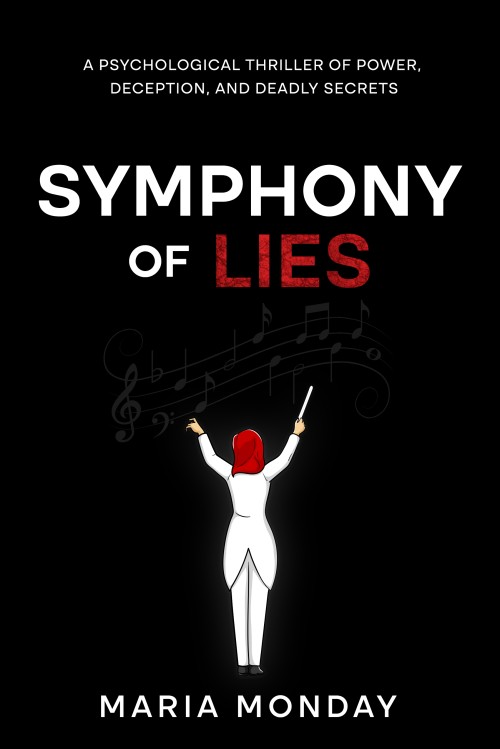
Symphony of Lies opens like a door slammed by winter: a Swiss chalet, a restless journalist, and a registered letter that feels more like a verdict. Within a few pages, Maria Monday makes comfort and dread share the same hearth.
Emma Bally has stepped away from investigative journalism, carrying the kind of guilt that doesn’t wash off—especially after she’s taken money to stop inquiries “once things were fixed.” When Nicole Wagner dies, Emma is summoned to Monaco for a will reading that is staged with precision and menace: everyone must attend, questions are controlled, and inheritances come with conditions. From that moment, the book becomes a braided chase—Emma and her psychologist friend Angela Rossi following letters, police files, and patterns of “accidents” that keep repeating: sedatives, stairwells, drowning, convenient reports, and witnesses who suddenly don’t last. The Marianne Foundation, at first a philanthropic shell, gradually reveals itself as infrastructure—money, surveillance, and a service economy built around extreme discretion. One scene in particular stuck with me: Fernanda arriving bruised and casted, describing polite, professional torture as “just business.” It’s not just plot; it’s a thesis about how evil modernizes. And yet it reads with surprising warmth.
Emma is a compelling center: sharp, compromised, lonely, and stubbornly ethical in the ways that matter. Nicole—magnetic, secretive, and frighteningly competent even in absence—becomes the novel’s moral weather system, pulling everyone into her orbit. Angela brings emotional ballast and moral debate, while Max the dog anchors the book’s humanity. Monday’s prose leans cinematic; sometimes the exposition is dense, but the suspense rarely drops.
On the snowy drive back to Saanen, Emma accepts she has inherited not only wealth, but a war—and chooses to fight smart, not clean. If you want a thriller that leaves you deciding where you stand on power, complicity, and survival, read this. The “Honey Badger” principle lands hard—and lingers.
Help us improve by giving your feedback.
Submit Feedback