Home / Book Reviews / So You Want To Be A Rocket Scientist
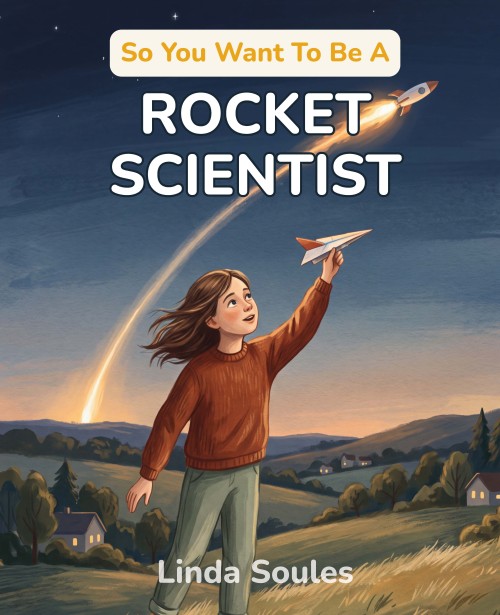
A paper rocket over a fence is a small promise. Linda Soules keeps it in So You Want To Be a Rocket Scientist by treating the roar on the pad as a fight against weight, won by people who check every gram. From the beach the job looks like genius. At the console it becomes patience, careful checking, and the courage to stop a countdown.
These pages move from how a rocket works to the quiet work behind liftoff. Engineers spend years testing engines and guidance, then watch a flight from launch control and study the data afterward. Lives grow under that same pressure, from Tsiolkovsky's black bread and library years to Brill's thruster after engineering rejects her. Hard history stays plain: a Mars craft lost when feet met meters, and von Braun's Moon rocket beside prisoners who died building his wartime weapons. Readers come away knowing that care reaches a phone camera chip first built for a spacecraft.
Soules writes so a huge fact can be felt. A rocket is mostly fuel, and lifting that fuel takes still more fuel, the way a marathon runner carries every snack. The prose stays plain, defining a word when it is needed, until launch talk grows familiar. Trouble sits inside the pleasure. Years of study can vanish with a lost budget, yet her closing note has the sound of a voice at the kitchen table after the television goes quiet.
A kid who already fills a test notebook will know what to do with this. Read the number twice, change one thing, and write down what failed. That habit suits readers around ten to fourteen, and a parent beside them can share the difficult parts too. Leave it on the desk.
“ [I] read books because I love them, not because I think I should read them. ” ― Simon Van Booy


Help us improve by giving your feedback.
Submit Feedback