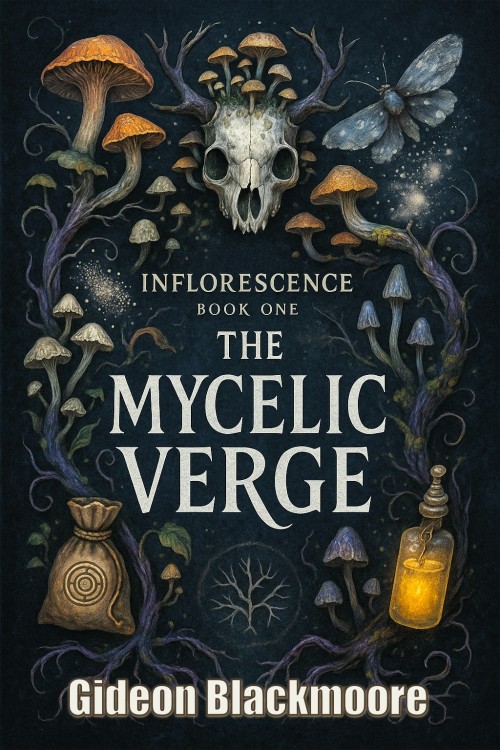

The Mycelic Verge is a dark fantasy novella about survival, guilt, and the slow return of hope in a land left to rot.
Ellandria has been dying for a century. A fungal plague has hollowed its forests, twisted its creatures, and left civilisation clinging to its last breath. Maren survives by staying alone until a desperate mother offers her an amulet identical to the one her brother wore the day she lost him.
Guided by guilt, she agrees to lead them through the rot-choked wilderness to a forgotten temple said to hold a cure. But the deeper they go, the more the forest resists their presence, and the harder Maren must fight to keep what remains of her humanity.
For lovers of
- Gritty dark fantasy
- Atmospheric worldbuilding
- Fungal horror and corrupted forests
- Quiet, emotionally damaged protagonists
- Stories built on guilt, survival, and the slow return of hope
What you’ll get
- Haunted landscapes
- Fungal mutation and psychic rot
- Gruesome monsters and knife-edge decisions
- Action, intensity, and stakes that escalate
- Magic, mystery, and a world worth unravelling
What you won’t
- Elves
- Romantasy tropes
- Endless exposition
- A happy little quest
Q. What inspired you to write this book? Was there a particular moment or event that sparked the idea?
Ans. The idea for The Mycelic Verge developed slowly. It wasn’t a single lightning-bolt moment, but a gradual build-up of images, moods, and questions that stayed with me. I became fascinated by the concept of decay as something active and intelligent. not just a backdrop, but a presence with its own intent. At the same time, I wanted to explore guilt and emotional rot. The kind that lingers, the kind we carry when we’ve let someone down and can’t take it back. The fungal infection became a physical expression of that... something that spreads quietly, takes hold, and changes everything. Maren emerged from that space. A survivor who’s shut herself off completely, only to be pulled into a situation she can’t ignore. It became a story about confronting the things we’ve buried and the cost of choosing to feel again.
Q. What research did you undertake to write this book? Were there any surprising or unexpected findings that you discovered during your research?
Ans. A lot of my research centred around fungal biology, particularly how real-world fungi behave: mycelial networks, parasitic fungi like Ophiocordyceps, and how spores spread and take hold. I was especially interested in the way some fungi hijack their host’s behaviour. That idea of something subtle, slow, and persistent completely reshaping a living thing really stuck with me. What surprised me most was just how much communication and intelligence can exist in fungal systems. There’s something eerie and beautiful about it, and it gave me a lot of material to twist into something more sinister.
Q. What was the biggest challenge you faced while writing this book? How did you overcome it?
Ans. The hardest part was knowing when to stop pulling it apart. I kept circling back - refining, reworking, questioning whether it was good enough. There’s a fine line between improving something and unravelling it, and I definitely danced on that edge. It wasn’t just about the prose or plot either - it was about trusting the story I wanted to tell. Letting it be quiet when it needed to be. Letting it breathe. I’m not sure I ever fully “overcame” that instinct, but I learned to recognise when I was revising to serve the story versus when I was just trying to outsmart my own doubt.
Q. How did you go about developing the characters in the book? Were any of them based on real people or events?
Ans. The characters started as questions more than people. What does survival look like when hope feels dangerous? What happens when guilt becomes the thing keeping you alive? Maren in particular came from that space - someone who’s shut herself off so completely that connection feels like a threat. Her arc grew from exploring what it means to carry loss and still move forward. None of the characters are based directly on real people, but the emotions behind them absolutely are. That sense of grief lingering under the surface, the push-pull between wanting to help and wanting to protect yourself, the fear of caring again - all of that’s drawn from real places. It’s not autobiographical, but it’s emotionally honest.
Q. Can you share any interesting anecdotes or stories related to the writing of this book?
Ans. I wrote most of The Mycelic Verge at night, once the rest of the house was quiet. Something about that late silence made the world of the book feel closer - like the rot was just outside the window, waiting. More than once I’d get so deep into a scene that I’d forget to turn on a light, then look up an hour later and realise I was sitting alone in the dark, writing about fungal infection and creeping dread. That probably says something about where my head was at during the process.
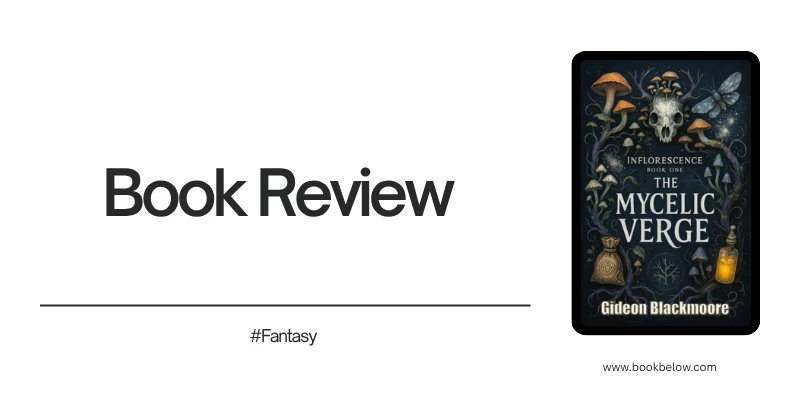
In Gideon Blackmoore’s dark fantasy novella The Mycelic Verge, Book One of the Inflorescence series, a hardened survivor named Maren navigates a world ravaged by the Hollowing, a fungal plag... Read the full review






Browse our calendar below to see all upcoming events and never miss a free book opportunity.
See Free Books & CalendarHelp us improve by giving your feedback.
Submit Feedback