Home / Book Reviews / The Things I Agreed To
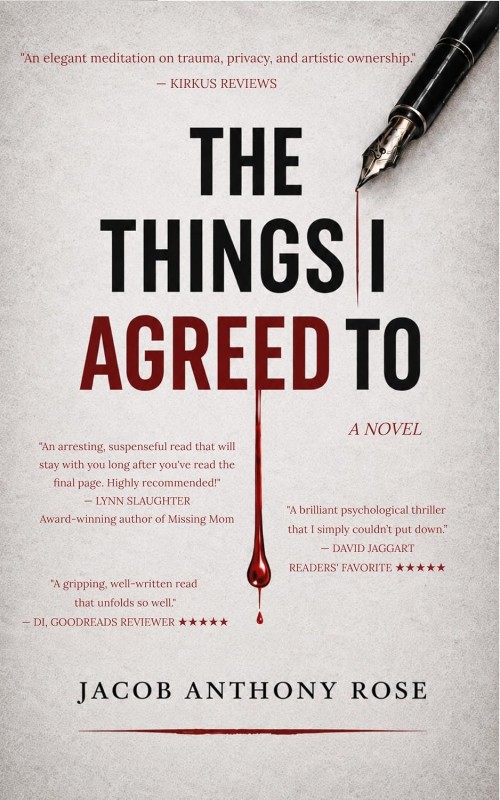
Jacob Anthony Rose’s The Things I Agreed To turns a book release into a test of how long a writer can decline to explain herself. On release morning, novelist Susan Price lets the phone vibrate and takes the dog out. The messages keep coming anyway.
Susan lives in a city apartment with Olive, whose world is sidewalk, biscuit, and Randy’s newsstand. Norbridge House has released her latest novel, which shares this book’s title, after three years of work she prefers not to discuss. She has agreed to being read and to silence afterward. Online posts lift her scenes as if they were a personal record. Claire, her publicist, checks in with concern that is also a request, and the publisher offers protection by shaping the narrative. Once silence is read as evidence, it begins attaching itself to her name. Therapy fragments break into mornings at the counter. Kate and Mara stay, and neither presses her to speak.
Rose dates the book by calendar and clock, so pressure gathers hour by hour. He writes close, from the kitchen and from what Susan’s body is doing. Most dialogue comes in professional sentences that sound like care. People around Susan stay quiet company more than conversation. Olive’s walk keeps time without commentary. Flashbacks cut mid-routine, then return to an apartment that has not moved.
This is for readers who will stay with a writer under watch, and it is worth staying. The suspense lives in how she is read, in attention more than in incident. What remains is the cost of being read too closely.
Help us improve by giving your feedback.
Submit Feedback