Home / Book Reviews / Stillness and Survival
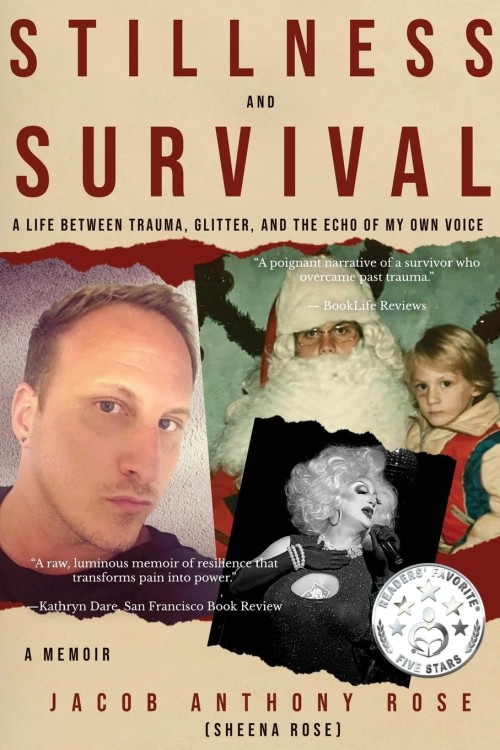
Jacob Anthony Rose's "Stillness and Survival" starts with this gut-punch of an image: a three-year-old on Santa's lap, eyes already hollowed out by trauma. Rose spent years thinking "my existence was wrong, that love was something I had to earn, and safety was a luxury meant for other people." This book is him figuring out that's not true, and he tells that story through childhood abuse, drag, and finally getting to a place where he could heal.
He doesn't hold back about the physical abuse from his father, the constant fear, the sexual abuse by people outside his family that he buried for years. He writes about it straight, no drama, no dodging. What saved him was drag. As Sheena Rose, he found a home in San Francisco's queer nightlife. Those stages became places where he could finally use his voice—the one his childhood had shut down. Music gave him something to hold onto, starting with lip-syncing in bars and eventually leading to recording his own dance tracks with producer Leo Frappier.
The people who stuck with him matter a lot here. Terrie, who his father groomed as a teenager but who became Rose's real mom, and Juan, his husband, who stayed through the mental health breakdowns and recovery. This is the kind of chosen family that actually makes healing possible. Rose doesn't make them perfect—he shows how messy these relationships are, but also how much they meant.
Later in the book, he gets into depression, panic attacks, drinking, and finally cutting his father off over politics. He writes about all of it with the same directness as the earlier stuff. Ending contact with his father wasn't about revenge—it was just what he needed to do to stay okay. The book ends with Rose legally changing his name to Jacob Anthony Rose, dropping the name his father gave him. It's his way of saying he finally gets it: he was always worth loving, always belonged somewhere.
“ The library is inhabited by spirits that come out of the pages at night. ” ― Isabel Allende


Help us improve by giving your feedback.
Submit Feedback