Home / Book Reviews / Reimagining Government: Achieving the Promise of AI
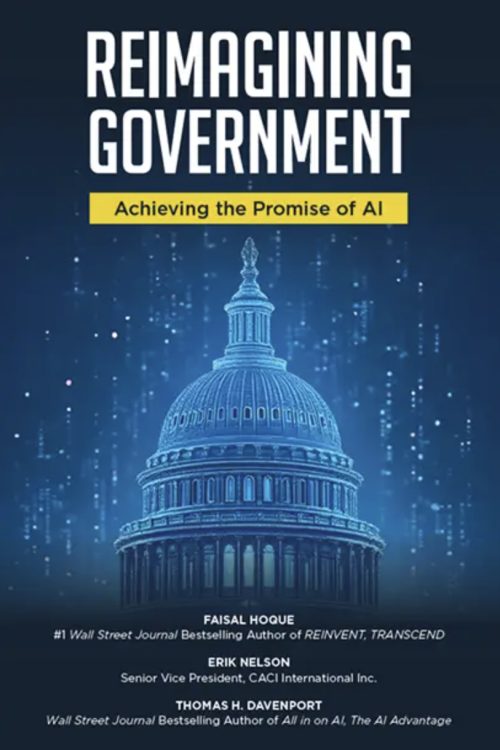
"Reimagining Government: Achieving the Promise of AI" tackles one of the most pressing challenges facing government today: how to successfully implement artificial intelligence while maintaining public trust and delivering better services. Written by a team of experts, it's essentially a practical guide for government leaders who want to get AI right rather than just get AI implemented.
The core argument is refreshingly straightforward - AI isn't just about technology, it's about organizational transformation. The biggest barriers to successful AI adoption aren't technical limitations but cultural and structural ones. Government agencies need to invest as much in workforce development and cultural change as they do in computational infrastructure.
This book introduces two key frameworks that actually work in practice. The OPEN framework (Outline, Partner, Experiment, Navigate) provides a systematic approach to identifying mission-aligned opportunities, building partnerships, testing solutions, and scaling what works. The CARE framework (Catastrophize, Assess, Regulate, Exit) helps agencies think through potential failure modes and build appropriate safeguards.
What makes this book particularly valuable is its focus on real-world examples. From Los Angeles using AI cameras on buses to generate 17 times more parking citations, to Pittsburgh's traffic signal system reducing travel times by 25%, Faisal Hoque and his team show how AI is already transforming government operations.
This book doesn't shy away from hard questions about data privacy, security, and maintaining human oversight. It emphasizes that successful AI implementation requires balancing innovation with risk management, and that agencies must maintain appropriate human involvement in decision processes.
The writing style strikes a nice balance between being accessible and authoritative. Hoque and his co-authors avoid typical academic jargon, instead using clear, direct language that makes complex concepts digestible. They write like people who actually understand both the technical and human sides of AI implementation.
Ultimately, this is a book about leadership and vision. Government agencies have a responsibility to embrace AI not just as an opportunity, but as an imperative for better public service. The choice isn't whether to change because of AI - that change is inevitable. The choice is whether to shape that change proactively or let it happen reactively.
“ I do things like get in a taxi and say, The library, and step on it. ” ― David Foster Wallace


Help us improve by giving your feedback.
Submit Feedback